Vatican City
La piel del tamborVatican City is both a physical seat of church government and a dense network of institutional power in The Seville Communion. A hacker’s intrusion begins in its central computer system and reaches the Pope’s personal computer; the ensuing inquiry sends Lorenzo Quart to Seville, where the Vatican’s internal rivalries intersect with a local church’s threatened future. The city’s reach is felt less through a broad portrait of its streets than through guarded rooms, computer terminals, official dossiers, and the decisions made in its name.
The Vatican’s digital and physical center
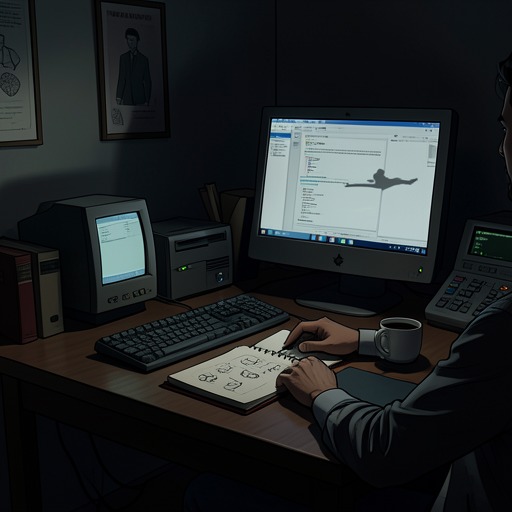
Eleven minutes before midnight, an intruder penetrates the Vatican’s central system. Thirty-five seconds later, a connected computer raises an alarm, and the letters HK appear on a monitor. The Jesuit on duty, entering census data for the Papal State, alerts his superior. Such attacks are familiar: hackers usually test the outer security perimeter and leave messages or small viruses, traces meant to show that they have been there. This intrusion is different. The transfer record shows the internal memory increasing as the hacker breaks a security key and inserts an unauthorized file.
Father Ignacio Arregui eventually calls the emergency number of the Apostolic Palace’s secretariat. After seven rings, he reports that an intruder has entered the Pope’s personal computer. The escalation from a monitored system to the pontiff’s own machine makes the incident an institutional crisis, not simply a technical curiosity. Vatican City’s most guarded information systems become the point at which anonymous digital action touches the highest level of church authority.
The computer operation has a substantial physical setting. Arregui leaves his room and walks fifty metres along a dim corridor beneath frescoes toward the computer room; through the windows lie the deserted Via della Tipografia and the dark facade of the Belvedere Palace. The contrast between ancient ceremonial surroundings and the active screens is integral to the episode: the threat arrives through a modern network, while the response moves through an old hierarchy of offices, calls, and formal authority.
Institutions, jurisdiction, and internal rivalry
The Vatican’s security structure is presented through the Institute for External Works, or IOE. Officially listed as a department of the Secretariat of State, the Institute is understood by Swiss Guard recruits to coordinate the Vatican’s secret intelligence services and to have served for two centuries as the operational arm of the Holy Office. Within the Curia’s language of euphemism it is called the “Left Hand of God”; less discreetly, it is known as the Department of Dirty Affairs. The contrast between formal description and whispered nickname reveals how the Vatican’s public offices coexist with less visible mechanisms of power.
The inquiry is entrusted, for the time being, to the IOE rather than the Congregation for the Doctrine of the Faith. Paolo Spada explains that the Pope wants a proper investigation but regards involving the Holy Office as excessive. Cardinal Jerzy Iwaszkiewicz, standing with his back to the others, insists that the Inquisition no longer exists and repeats that nobody is burned anymore. His words carry a darker implication: coercion has changed its form rather than disappeared. Spada then gives Quart the assignment to identify the author of the message in Seville, maintain discreet contact with the local church authorities, and keep the matter within reasonable bounds. The instruction makes the mission at once an investigation and an exercise in institutional restraint.
Spada later explains why the IOE has been given a matter that would ordinarily belong to the Archbishop of Seville and his dealings with parish priests. The hacker incident is relatively minor, but the Pope’s interest makes it useful in the Curia’s struggle for influence. Spada wants a substantial report that demonstrates his department’s activity, satisfies the Pope, and helps keep Iwaszkiewicz in check. He calls Quart his best man, while warning that his own political fortunes and Quart’s may be linked. The assignment therefore carries consequences beyond identifying a hacker: its findings can become material in a contest over authority within the Vatican.
That contest has a recent history. Spada recalls that relations between the IOE and the Holy Office were once cordial, before a scandal dismantled the Vatican’s financial apparatus and the Polish leadership turned toward orthodoxy. The campaign against the liberal faction developed into a ruthless settling of accounts inside the Curia. In this setting, investigative jurisdiction is not neutral. Which office handles a case, what information reaches the Pope, and how the outcome is presented all have political weight.
From Rome to Seville
Quart’s mission places Vatican City in a relationship of supervision and distance to the Seville Archdiocese. He is ordered to establish himself in Seville for several days, identify the author of the message, and keep in prudent contact with local ecclesiastical authority. The local archbishop, Aquilino Corvo, argues that the matter belongs to his diocese and its parish relationships; the assignment from Rome instead makes it an IOE concern. A local church problem is thus drawn into the Vatican’s administrative orbit, even as the Roman investigator must negotiate with the authority on the ground.
The stakes in Seville are not only ecclesiastical. Banco Cartujano has prepared an operation to use the church site, offering the diocese compensation despite its having only a moral claim grounded in three centuries of worship. The proposed benefits include funding for a church in one of Seville’s poorer districts and a foundation supporting social work among the Romani community. Corvo presents the deal as a practical response to parish poverty, while the parish priest’s resistance has halted it. The Vatican’s investigation arrives in a conflict where the church’s spiritual claims, a bank’s redevelopment plans, and diocesan finances already press against one another.
Corvo later tells Quart that Rome has left the matter to him and the IOE, while the archbishop will provide support and prayers. Quart understands that the police may be moving faster than he is and weighs the consequences of a priest being arrested before Rome receives an account of the case. He wants the Church to take the initiative where possible, to secure a lawyer for the parish priest and defend his innocence until evidence establishes otherwise, but also to facilitate secular justice if guilt becomes clear. The calculation exposes the gap between the Vatican’s demand for control of the narrative and the actual requirements of justice.
Surveillance, anonymity, and the hacker’s route
The Vatican’s response to Vísperas demonstrates that its computer defenses are active systems of counter-surveillance. Arregui’s team sets “Sadducean traps”: decoy areas arranged like nets at a river mouth, intended to disorient an intruder or reveal information that can identify them. A trap laid around the protected INMAVAT file works only when someone enters from outside. The intruder then carries an unseen code into the system, without knowing it, like a remora attached to a larger creature.
When the trace reaches VOIA, the personal terminal associated with the Pope, the hidden code prevents access to the real destination and redirects the hacker to VOIATS, a fictitious system. Vísperas can continue to believe that messages are being left on the Pope’s computer, while the real machine remains protected. The plan depends on controlled misdirection: the Vatican does not merely block access but constructs a false destination in which the intruder’s actions can be observed without causing damage. The cursor pauses at VOIA, the operators wait through ten seconds of silence, and then the system shows the hacker entering.
The investigation also has limits. Simeón Navajo reports that none of the commercial firms on Quart’s list sold advanced computer equipment under their own names and tax numbers. A contact at Telefónica tells him that Vísperas is not the only hacker who travels through telephone networks to reach foreign systems, including the Vatican. The intruder uses loops and programs that erase traces and confuse detection systems. The technical contest is consequently not a simple pursuit from a secure center toward an exposed outsider: the hacker’s routes are deliberately dispersed, and each attempt to identify a point of entry confronts the possibility that the apparent trace is itself misleading.
The unexpected author and the novel’s use of Vatican City
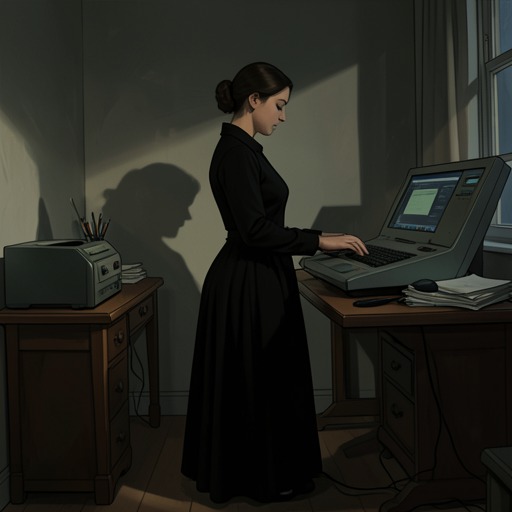
The eventual explanation connects Vatican City’s computer network to an unlikely hacker: Cruz Bruner, an elderly woman who learned to explore online systems through a friend known as Mad Mike, who sometimes used the name Viscount Valmont. His pirated bulletin-board system introduced her to other technology enthusiasts, often young people spending long hours alone with computers. She entered a largely anonymous community whose members exchanged information and moved through systems under assumed identities.
Cruz says her first opening into the Vatican system came by chance, through a Roman contact called Deus ex Machina, whom she suspects was a young seminarian or priest. He had been exploring the system’s periphery and passed her useful clues. Six or seven months before her account to Quart, when the problem of Nuestra Señora de las Lágrimas had become more serious, she decided to use that access to make the parish priest heard in Rome. Neither the Archbishopric of Seville nor the nunciature in Madrid had listened to him. Her initial plan was to leave a message in the Vatican’s central system and hope that it reached sympathetic hands; the idea of manipulating the Pope’s own computer came later, as she learned more about the network.
Cruz’s account explains why the Vatican setting matters beyond its status as a seat of government. Its systems promise access to a distant authority capable of hearing a complaint ignored by local church offices, but that access is mediated by secrecy, security protocols, false trails, and institutional rivalry. The hacker’s anonymity does not erase the personal stakes: an older woman uses a digital identity and an informal community of contacts to bring a local church dispute into the attention of Rome. Vatican City thus becomes both the remote center of a powerful hierarchy and a vulnerable point of contact through which that hierarchy can be challenged.